

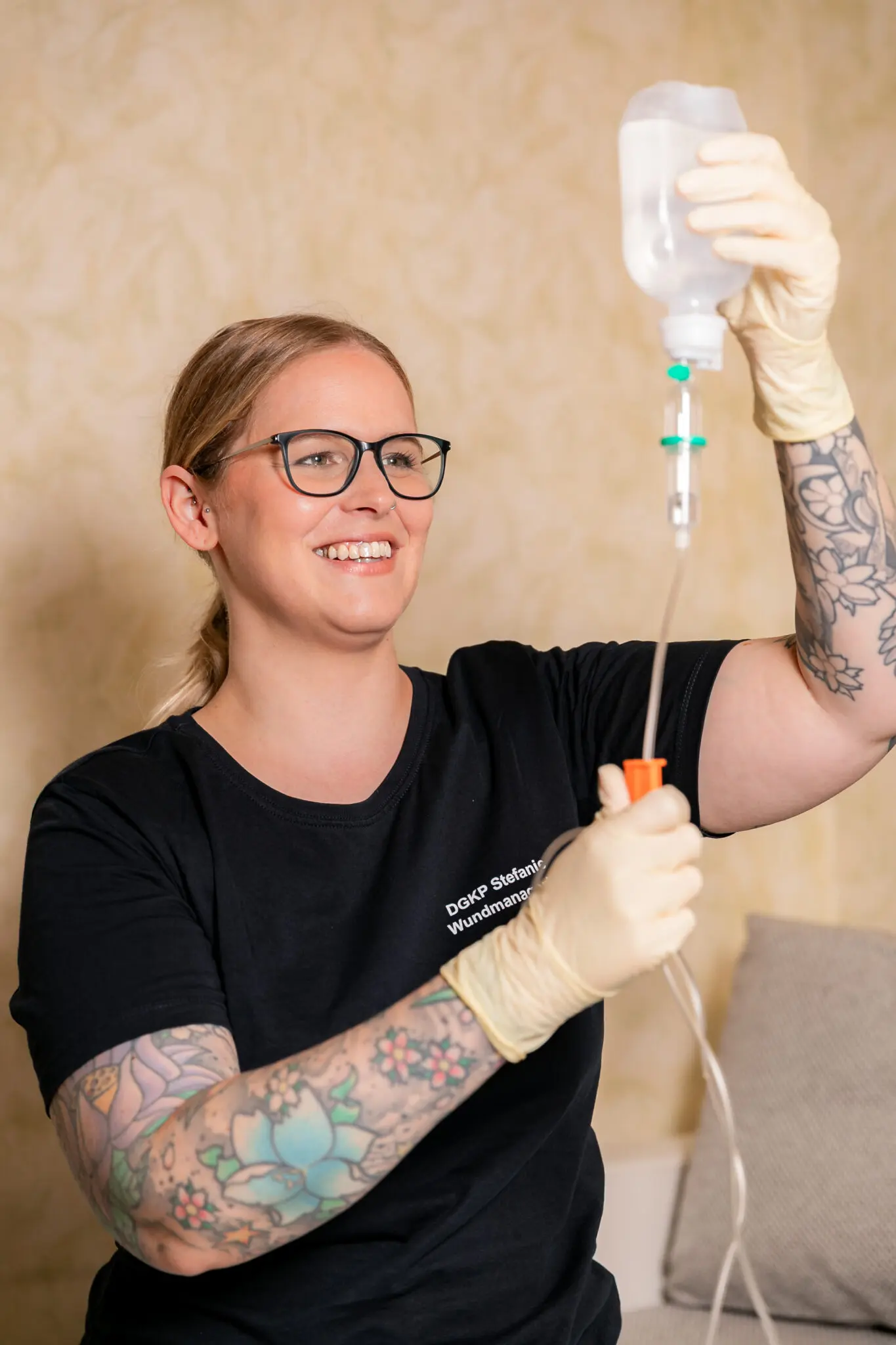
Types of infusion at home – individual care in familiar surroundings
Infusion therapy in Vienna covers various types of infusion, which are used depending on medical need and setting. Our aim is to support your health and make everyday life easier. Infusions are distinguished by their purpose and content:
- Hydration infusions – These provide fluids and electrolytes, e.g. for dehydration due to vomiting, diarrhoea or heat. They are often saline or glucose solutions.
- Medication infusions – Administration of antibiotics or painkillers, e.g. for infections or illnesses
- Nutritional infusions – Artificial nutrition through a vein with vitamins, protein and fats – e.g. for severe bowel diseases.
- Blood transfusions – to make up for blood loss or anaemia – unfortunately not possible at home
Short-term, long-term or palliative – how we plan your infusion
We plan and monitor every infusion carefully together with your GP.
- Short-term infusions – for one-off or short-term treatments, e.g. antibiotics
- Long-term infusions – regularly or continuously, e.g. for chronic illnesses
- Regular home visits – our registered nurse comes to give the infusion and monitor it
- Palliative care – subcutaneous infusion into the fatty tissue, e.g. with saline or Ringer's solutionLearn more: Palliative care →
Benefits of infusion therapy at home compared to hospital
Infusion therapy at home offers many benefits compared to treatment in hospital and makes care more pleasant for patients. It combines medical precision with personal comfort. Our mobile nursing service in Vienna makes sure it is carried out safely and with compassion.
- Comfort and familiar surroundings – At home, you can stay in your usual environment, which reduces stress and supports your well-being.
- Individual care – Our registered nurse provides personal care tailored to your needs.
- Saves time – No long journeys or waiting times – infusion therapy is organised flexibly around your schedule.
- Less strain – Many people find treatment in their own home more pleasant – without a waiting room or a journey.
- Supports independence – Being at home allows you to continue your everyday activities.
- Family close by – Relatives can support you and be more involved, which can be an emotional relief.