
Pflegstro – home nursing and wound care in Vienna
EN
+43 681 10447544Call
Home/Wound care/Diabetic foot syndrome
Condition · Appointment usually within 48 hours on weekdays

Diabetic foot: Wound treatment in Vienna

With a diabetic foot, nerve damage, poor blood flow and a higher risk of infection lead to wounds that heal poorly – often unnoticed, because the sense of pain is missing. Early, professional care lowers the risk of serious consequences, up to and including amputation.

Call nowRequest an appointment →
5.0 from 13 Google reviews · Registered nurses & certified wound managers
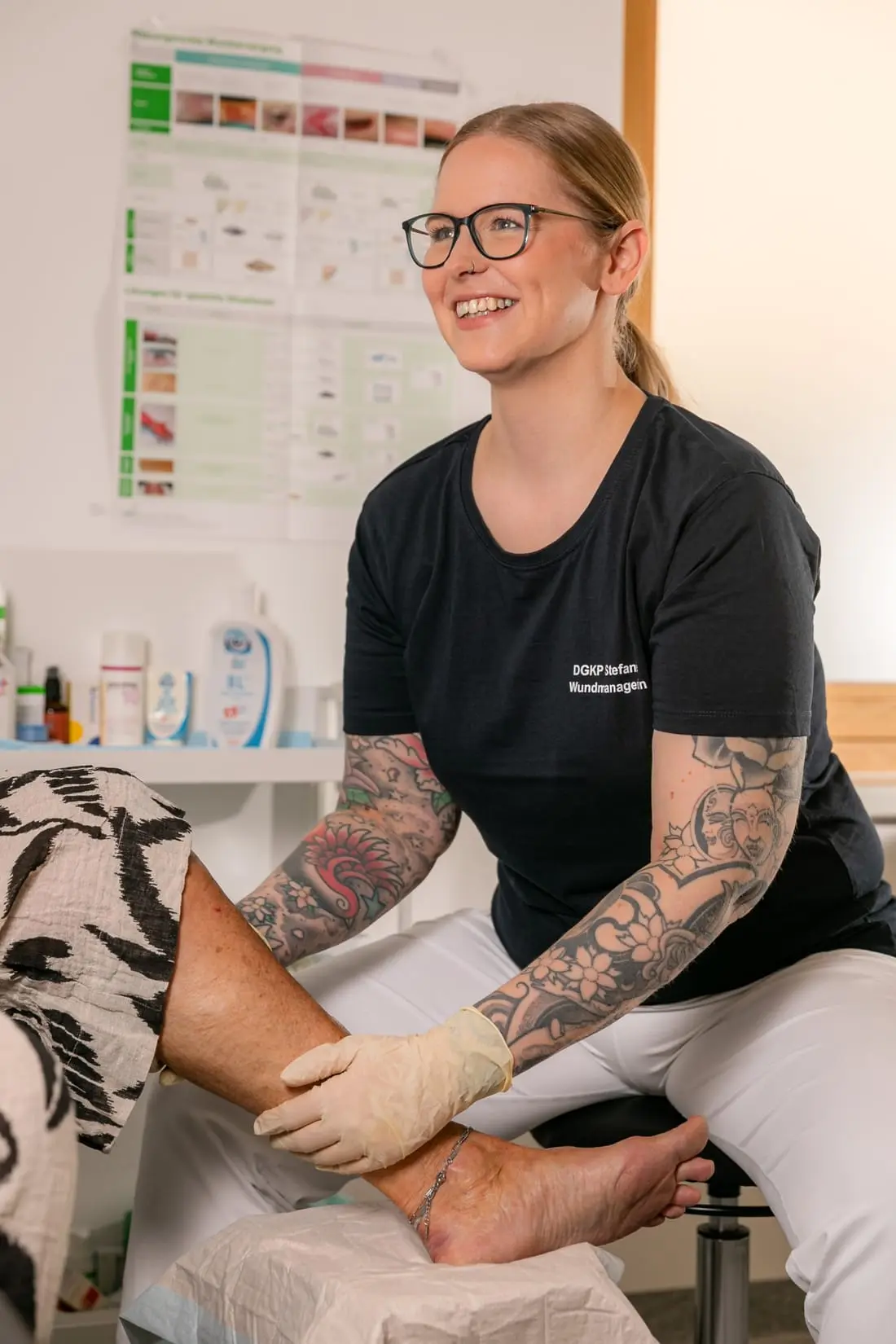
Photo: certified wound manager checking a patient's foot
Where
Home visit or wound clinic
Appointments
Quickly, within a few days
Duration
approx. 45 min · 2× per week
Pain
Relief through modern wound treatment
Dressings
We handle follow-up prescriptions & ordering

Causes of diabetic foot syndrome

Usually several causes come together. Knowing them helps you recognise risks earlier.

Typical warning signs are numbness, tingling or open ulcers – because the sense of pain is reduced, they often go unnoticed for a long time.

  • Peripheral neuropathy – permanently high blood sugar damages the nerves – injuries and pressure points go unnoticed
  • PAD (poor blood flow in the legs) – narrowed arteries restrict blood flow, so wounds heal more slowly
  • Infections – a weakened immune system makes it easier for germs to settle
  • Mechanical stress – unsuitable footwear or foot deformities cause pressure points
  • High blood sugar levels – slow down healing and make all complications worse
  • Poor foot care – inadequate hygiene increases the risk of injuries and infections

Treating a diabetic foot

Treatment begins with precise wound care: cleaning, disinfection and debridement (removal of dead tissue). Modern wound dressings create a moist healing environment. Offloading with insoles or diabetic shoes prevents further damage.

In advanced stages, antibiotics or surgery may be needed to fight infection.

In addition, low-level laser therapy can support the healing of wounds that heal poorly; most people feel only slight warmth. We work closely with your doctors.

Daily foot care is also part of the treatment. We train you and your relatives – from hygiene and nail care to measuring blood sugar and managing diabetes – so that you can actively help prevent problems yourself.

Care tips

Tips for healthy feet

01

Check your feet every day

use a mirror to look for redness, blisters or injuries – including between the toes

02

Careful hygiene

wash in lukewarm water, dry thoroughly and moisturise dry skin – but not between the toes

03

Suitable footwear

wear roomy diabetic shoes and check them for foreign objects before putting them on

04

Nail care

file your nails carefully instead of cutting them – see a podiatrist if needed

05

Do not walk barefoot

slippers or bathing shoes protect against injuries

06

Regular check-ups

see a podiatrist or a certified wound manager

07

Check your blood sugar

measure it regularly and keep it stable with a balanced diet – this protects nerves and blood vessels

What patients and relatives say

5.0 from 13 Google reviews

“Ms Schmelzer and her team are absolutely wonderful. They are extremely patient and do perfect work.”

D. L. · Google review, translated from German

“Especially with sensitive issues […] you notice the high level of professional competence. […] great on a human level and absolutely reliable professionally.”

H. K. · Google review, translated from German

“Not only the expertise and the empathetic, friendly manner […], but also the flexibility in finding appointments and the comprehensive advice completely convinced me.”

M. P. · Google review, translated from German

Selected reviews from our Google Business Profile, translated from German (shortened with […]). We have checked that the reviews shown come from people who have experienced our services themselves – as patients, relatives or carers. Partners are labelled. Overall rating: 5.0 out of 5 stars from 13 reviews (as of November 2026). All reviews on Google. Healing outcomes vary from person to person.

Frequently asked questions

What should I do about a wound on a diabetic foot?

Take every wound on your foot seriously, even if it does not hurt, and have it seen by a doctor quickly. Take the weight off the foot and do not treat the wound yourself. After that, it needs regular, professional care – coordinated with your doctor.

Why doesn't the wound on my diabetic foot hurt?

Diabetes often damages the nerves in the feet (neuropathy). You then hardly feel pressure, injuries or pain. That is why daily foot checks and a professional wound assessment are so important.

Can a diabetic foot heal?

Yes, many wounds on a diabetic foot do heal. This is most likely if they are treated early and consistently offloaded, and if your blood sugar is well controlled. Healing often takes patience. Regular wound care is an important requirement for it.

When do I need to see a doctor immediately with a diabetic foot?

If there is redness, swelling, warmth, pus, an unpleasant smell or fever, or if the foot turns dark. Please have it checked by a doctor the same day – in an emergency call 144.

How often is the wound on a diabetic foot treated?

Usually two to three times a week, depending on the wound and the dressing. At every appointment we also check the whole foot and any pressure points. This way, changes are noticed early.

Does laser therapy help with a diabetic foot?

Low-level laser therapy is intended to support wound healing; we cannot promise success. We only use it in addition to wound care – for €15 per treatment, at home or in the wound clinic.

Do you work with my doctor on diabetic foot care?

Yes. We coordinate with GPs, diabetologists and vascular specialists and send wound reports on request. We provide the wound care in your home in Vienna and the surrounding area, or in our wound clinic.

Book an appointment

  • Mon–Fri, 8:30 am – 6 pmavailable by phone
  • Weekends & public holidaysno home visits or clinic appointments; by phone only to make appointments
  • Callbackusually on the same working day
Phone+43 681 10447544E-mailoffice@pflegstro.atWhatsAppSend a messageA Meta service: when you write, data is sent to WhatsApp.

Not an emergency service – in an emergency:

  • 144Ambulanceif life is in danger (or 112)
  • 1450Health hotline24/7 – also tells you the nearest emergency department
  • 141On-call doctorsnights, weekends and public holidays

Request a callback

Just your name and phone number – we will get back to you usually on the same working day.

What is it about? (optional)

Please do not send diagnoses or photos of wounds – we will discuss them in person. Privacy

More topics: Wound care