
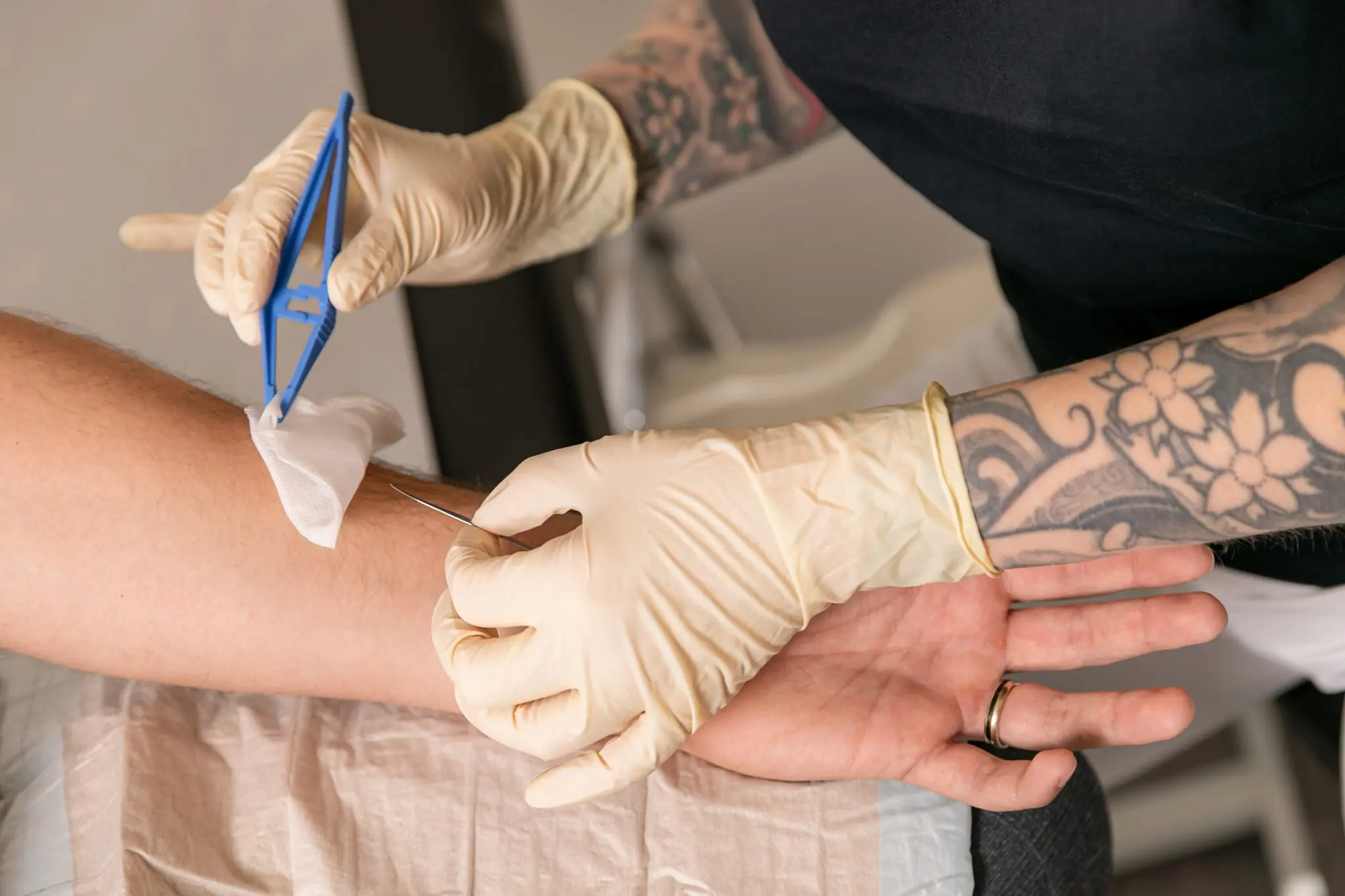
Causes of wound healing problems
Every wound healing problem is different – usually several factors play a role:
- Infection – germs cause inflammation, pus or abscesses
- Poor blood flow – for example due to peripheral arterial disease (PAD) or smoking
- Chronic illnesses – especially diabetes mellitus
- Malnutrition – a lack of protein, zinc or vitamin C slows down tissue repair
- Mechanical factors – pressure, friction or unsuitable dressings
- Medication & immune system – e.g. cortisone, immunosuppressants, chemotherapy
- Age – thinner skin, slower regeneration
- Moisture balance – a wound environment that is too moist or too dry disrupts healing
- Psychological strain – stress or depression can weaken the immune system
How we treat your surgical wound
Treatment is tailored to you. The choice of wound dressing depends on the depth of the wound, the amount of wound fluid and whether there is an infection.
In severe cases, surgery may also be needed, for example to remove dead tissue or for a skin graft – here we work closely with the doctors treating you.
- Wound cleaning & debridement – removal of dead tissue
- Hydrogels – for dry or coated wounds
- Foam dressings – for weeping wounds
- Silver or honey dressings – antimicrobial, for infected wounds
- Alginates – for deep, heavily weeping wounds
- Low-level laser therapy – can additionally stimulate blood flow and cell regeneration
- Hydrocolloids – form a gel layer and support the healing of superficial wounds
- Nursing measures – skin care and pressure relief through positioning or alternating pressure mattresses
Nutrition for better wound healing
Wound healing needs energy and nutrients. Protein (fish, eggs, pulses) supports collagen formation, vitamin C (peppers, citrus fruit) strengthens the immune system, and zinc (nuts, wholegrains) promotes cell regeneration.
Vitamin A (carrots, spinach) and omega-3 fatty acids from oily fish help to keep inflammation under control. Drink enough – a lack of fluids dries out the skin. If you have diabetes, stable blood sugar levels are particularly important.
Why wounds from accidents heal poorly
Wounds from accidents are often dirty and have irregular edges. Crushed tissue has poorer blood flow – an ideal breeding ground for germs.
- Dirt & foreign objects – soil, splinters or textile fibres in the wound
- Crushed tissue – damaged tissue dies and has to be removed
- Underlying conditions – diabetes, venous or arterial disease
- Blood-thinning medication – makes bruising under the wound more likely
- Thin skin in older age – tears more easily, e.g. as a skin tear on the forearm
How we treat wounds from accidents
After thorough cleaning and assessment, we choose moist wound care suited to the stage of healing. With skin tears, the skin flap is – if possible – gently put back in place and secured.
Soft padding or suitable footwear also take pressure off the wound in everyday life.
- Wound cleaning & debridement – removal of coatings and dead tissue
- Moist wound care – modern wound dressings that need changing less often
- Infection control – antimicrobial dressings if needed
- Low-level laser therapy – as an addition to support healing
- Coordination with your doctor – e.g. to check your tetanus protection