
Pflegstro – home nursing and wound care in Vienna
EN
+43 681 10447544Call
Home/Wound care/Pressure ulcers (bedsores)
Condition · Appointment usually within 48 hours on weekdays

Treating pressure ulcers: Help with bedsores in Vienna

A pressure ulcer (bedsore) is caused by constant pressure on the skin – especially in people who are bedridden or have limited mobility, often on the tailbone, heels or hips. We treat pressure ulcers according to their stage and place great emphasis on prevention.

Call nowRequest an appointment →
5.0 from 13 Google reviews · Registered nurses & certified wound managers
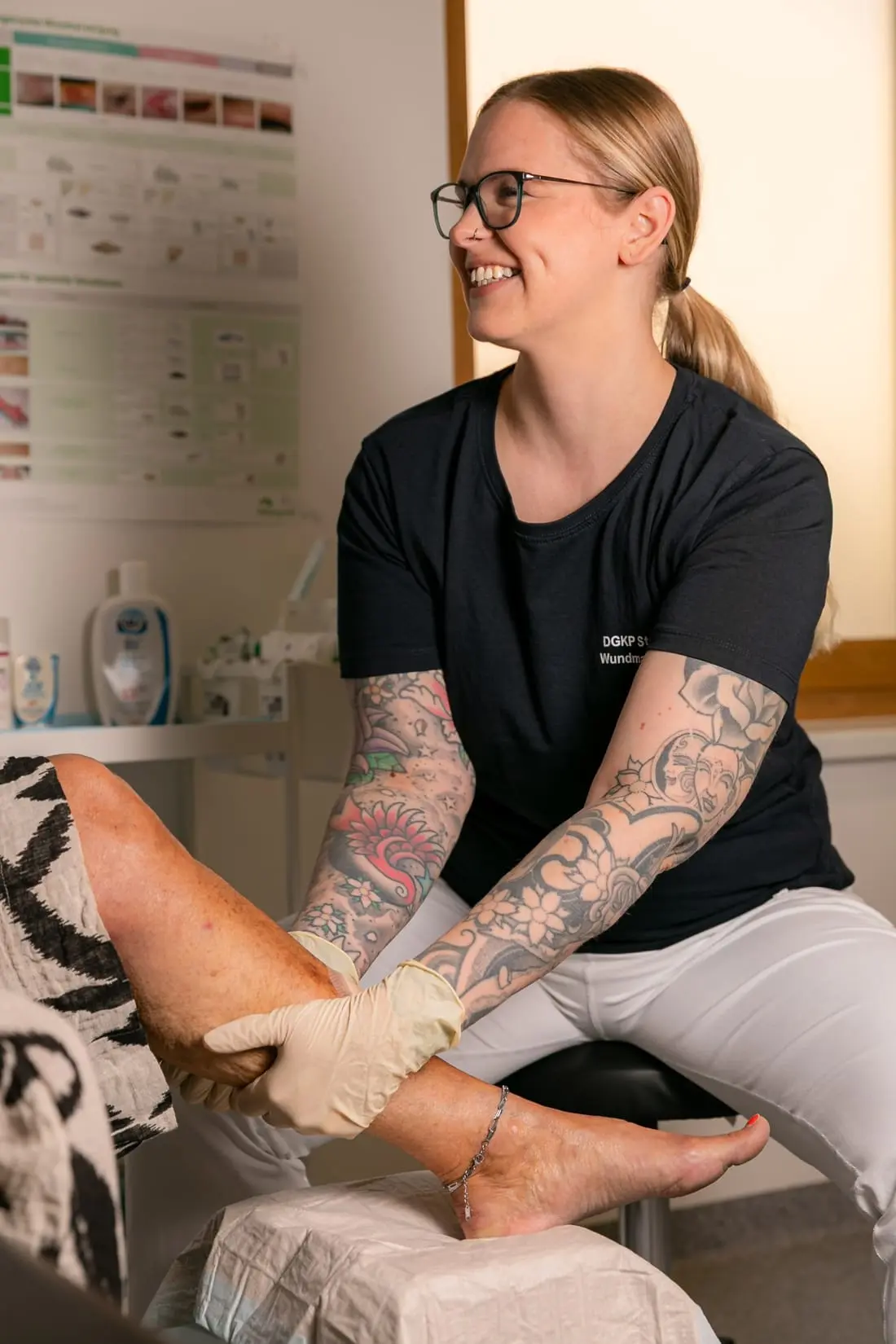
Photo: certified wound manager checking the skin on the lower leg and heel
Where
Home visit or wound clinic
Appointments
Quickly, within a few days
Duration
approx. 45 min · 2× per week
Pain
Relief through modern wound treatment
Dressings
We handle follow-up prescriptions & ordering

Causes of a pressure ulcer

Constant pressure reduces blood flow – and the skin and tissue become damaged. This often affects people with limited mobility, for example after surgery or with chronic illnesses.

  • Friction & shear forces – when slipping down in bed or in a wheelchair
  • Moisture – sweat or incontinence softens the skin
  • Malnutrition – impairs skin regeneration
  • Other risk factors – older age, thin skin, diabetes, a weakened immune system

Where pressure ulcers most often develop

Constant pressure squeezes the blood vessels – the skin and tissue no longer receive enough oxygen (ischaemia). Shear forces, for example when sliding down in bed, also push the layers of skin against each other.

Areas with little padding between skin and bone are particularly at risk:

  • Sacrum
  • Heels
  • Hips
  • Sitting bones
  • Elbows
  • Shoulder blades
  • Back of the head
  • Ankles

Treatment according to stage

In the early stages (grade 1⁠–⁠2), relieving pressure is the priority – with positioning aids or alternating pressure mattresses. The skin is cleaned and protected with suitable dressings.

In advanced stages (grade 3⁠–⁠4), debridement (removal of dead tissue) is essential, often combined with antimicrobial dressings. In severe cases, surgery may be necessary.

In addition to wound care, low-level laser therapy can be used; most people feel only slight warmth. This is combined with regular dressing changes, pressure relief and a diet rich in protein and vitamins.

Prevention remains key: regular skin checks, gentle skin care, nutritional advice and – as far as possible – getting the person moving.

Care tips

How to prevent pressure ulcers

01

Regular movement

small movements or a change of position every 2⁠–⁠4 hours

02

Skin care

keep the skin clean and dry, use mild care products

03

Pressure-relieving surfaces

soft mattresses and cushions, especially for the heels and tailbone

04

Nutrition

enough protein supports skin regeneration

05

Daily skin checks

look for redness in sensitive areas

06

Areas that are hard to see

check the sacrum or heels with a mirror

What patients and relatives say

5.0 from 13 Google reviews

“Ms Schmelzer and her team are absolutely wonderful. They are extremely patient and do perfect work.”

D. L. · Google review, translated from German

“Especially with sensitive issues […] you notice the high level of professional competence. […] great on a human level and absolutely reliable professionally.”

H. K. · Google review, translated from German

“Not only the expertise and the empathetic, friendly manner […], but also the flexibility in finding appointments and the comprehensive advice completely convinced me.”

M. P. · Google review, translated from German

Selected reviews from our Google Business Profile, translated from German (shortened with […]). We have checked that the reviews shown come from people who have experienced our services themselves – as patients, relatives or carers. Partners are labelled. Overall rating: 5.0 out of 5 stars from 13 reviews (as of November 2026). All reviews on Google. Healing outcomes vary from person to person.

Frequently asked questions

What should I do about a pressure ulcer?

Relieve the pressure on the affected area immediately – by changing position regularly and using a suitable mattress. An open pressure ulcer also needs professional wound care and a medical assessment. We provide the care at home and advise your relatives.

How can I recognise an early pressure ulcer?

By redness that does not briefly turn white when you press lightly on it with a finger (finger test). The skin is still intact – this is a grade 1 pressure ulcer. Consistently relieve the pressure on the area and do not massage it.

What grades of pressure ulcer are there?

There are four grades: grade 1 is persistent redness with intact skin, grade 2 is a blister or a superficial wound. Grade 3 reaches into the fatty tissue under the skin, grade 4 down to muscle or bone. From grade 2 onwards, professional wound care is needed.

How long does it take for a pressure ulcer to heal?

A grade 1 pressure ulcer can recover within a few days if the pressure is consistently relieved. Deep pressure ulcers often take weeks to months. No pressure ulcer heals without pressure relief – that is why positioning is always part of the treatment.

How often does a person with a pressure ulcer need to be repositioned?

That depends on the risk and the mattress – often every two to four hours, including at night. We draw up a positioning plan with you and show relatives the right positions.

Which aids help against pressure ulcers?

Depending on the risk: alternating pressure or soft positioning mattresses, positioning cushions and heel protectors. Many aids are available through the health insurance fund with a doctor's prescription. We advise you on what suits your situation.

Can a pressure ulcer be treated at home?

Yes, in many cases. Our certified wound managers treat the pressure ulcer in your home, in a care home or together with your 24-hour live-in carer. If there is a fever or the condition gets worse quickly, a medical assessment is necessary.

Book an appointment

  • Mon–Fri, 8:30 am – 6 pmavailable by phone
  • Weekends & public holidaysno home visits or clinic appointments; by phone only to make appointments
  • Callbackusually on the same working day
Phone+43 681 10447544E-mailoffice@pflegstro.atWhatsAppSend a messageA Meta service: when you write, data is sent to WhatsApp.

Not an emergency service – in an emergency:

  • 144Ambulanceif life is in danger (or 112)
  • 1450Health hotline24/7 – also tells you the nearest emergency department
  • 141On-call doctorsnights, weekends and public holidays

Request a callback

Just your name and phone number – we will get back to you usually on the same working day.

What is it about? (optional)

Please do not send diagnoses or photos of wounds – we will discuss them in person. Privacy

More topics: Wound care