
Causes of leg ulcers
A leg ulcer (ulcus cruris) is a chronic wound that typically appears on the lower leg, less often on the foot itself. It mainly affects older people, especially women, and people with vascular disease.
The main cause is venous insufficiency: the valves in the veins no longer close properly, and blood pools in the legs. Less often, the cause is an arterial problem that restricts blood flow. Diabetes or infections can also contribute. Typical signs are open wounds that heal poorly, pain and skin discolouration.
It often starts with heavy, swollen legs that have gone untreated for a long time. Early diagnosis and treatment can help prevent complications such as infection or tissue damage.
Treating a leg ulcer
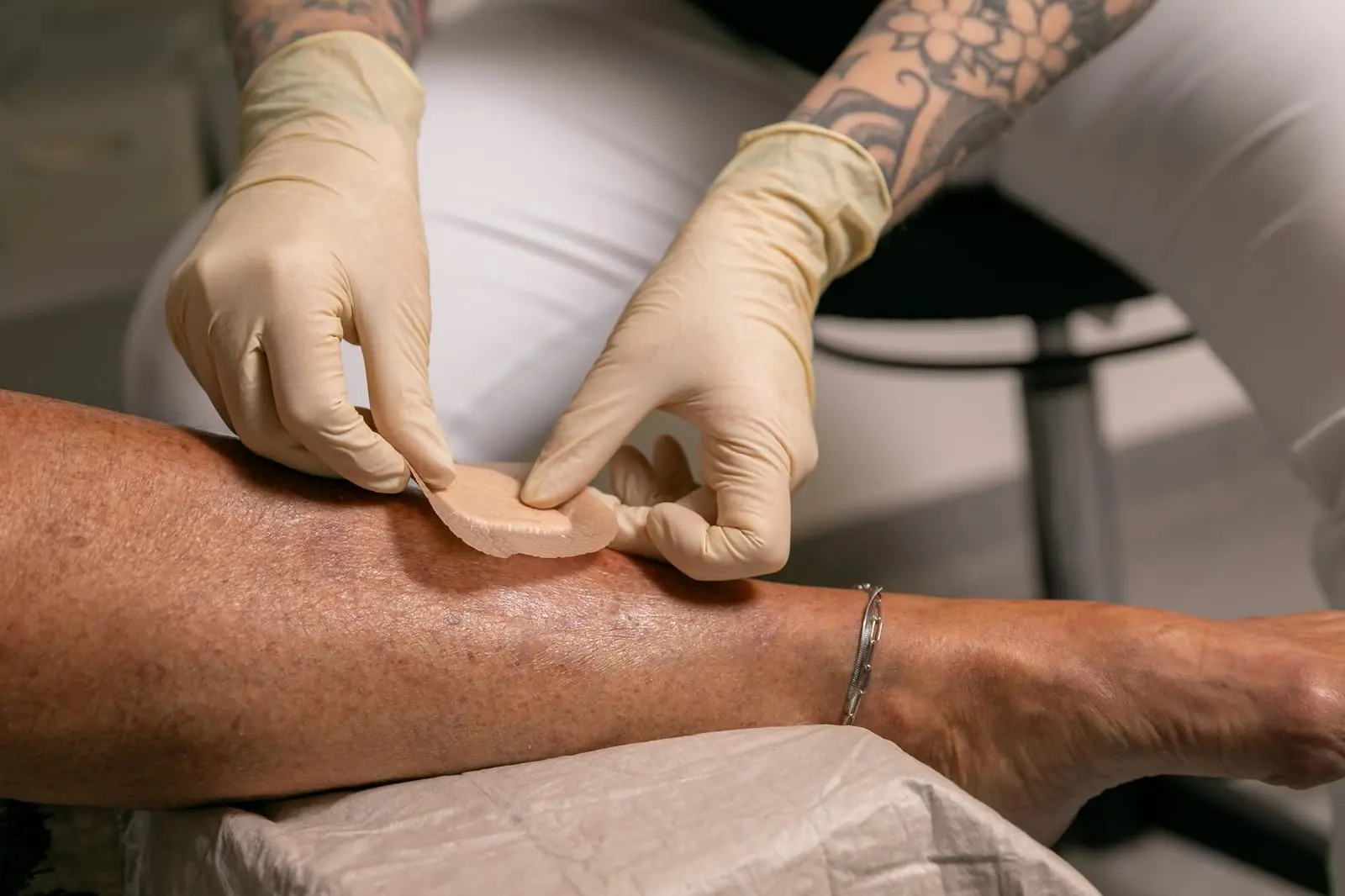
The wound is cleaned and dressed with dressings suited to each stage of healing – by trained, certified wound managers, directly in your home or in the wound clinic. Compression therapy is another cornerstone: it improves blood flow and reduces swelling.
Medication relieves pain and fights infection. In severe cases, surgery may be necessary – for example to remove dead tissue or to treat blocked blood vessels.
Working together with vascular specialists, who treat the underlying vascular disease, is essential. Without treating the cause, the wound often does not heal.
- Compression therapy – professional bandaging and fitting of compression stockings
- Low-level laser therapy – can support blood flow and cell regeneration as an addition to wound care
- Negative pressure wound therapy – for deep or heavily weeping wounds
Laser therapy for leg ulcers
In addition to wound care, we use low-level laser therapy. The low-energy laser light is intended to increase cellular energy (ATP), support collagen formation, reduce inflammation and improve blood flow – and it is well tolerated.
For smaller wound areas we use the mini laser, for large wounds the area laser. Most patients feel only a pleasant, slightly warming sensation; with severely inflamed wounds, a slight tingling may occur for a short time. Depending on the size of the wound, a session takes 5–10 minutes.
How long does healing take?
How long treatment takes depends on the cause and on your general health. Without professional care, healing can take months or even years – or not happen at all.
With modern moist wound therapy, consistent compression and your cooperation (exercise, compression stockings), treatment often takes only a few weeks to months.