
Causes of chronic venous insufficiency
In chronic venous insufficiency (CVI), blood is no longer carried back from the legs properly. Blood pools and fluid leaks into the tissue – causing swelling, weeping legs and, in advanced stages, a leg ulcer (ulcus cruris).
- Genetic predisposition – weak connective tissue is inherited
- Lack of exercise – sitting or standing for long periods weakens the muscle pump
- Excess weight – increases the pressure on the leg veins
- Thromboses – post-thrombotic syndrome permanently damages the vein valves
- Hormones & pregnancy – widen the vein walls
- Age – veins lose elasticity
Treatment options
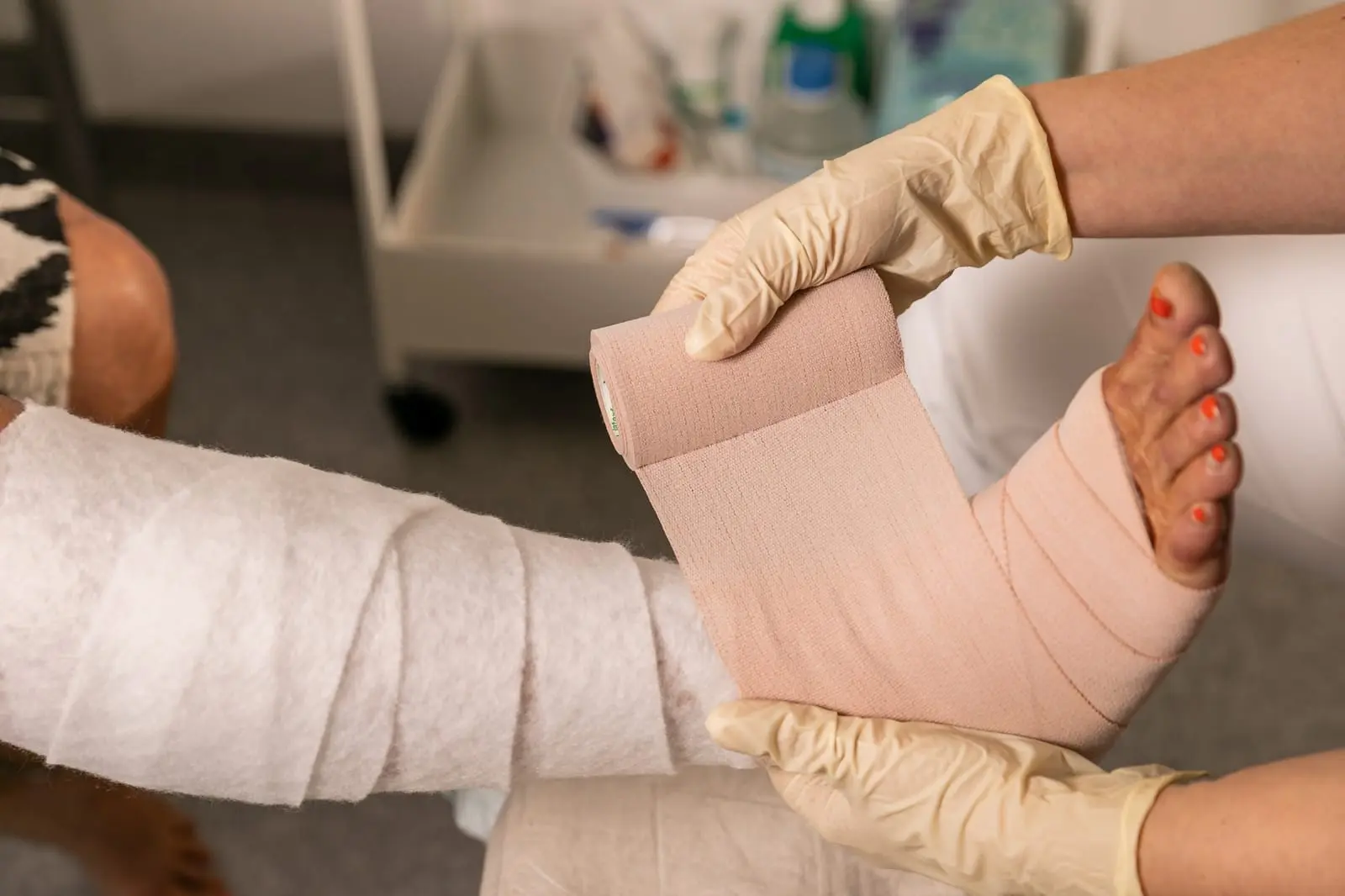
Compression therapy is the foundation of every CVI treatment: the diameter of the veins decreases, the blood flows faster and the vein valves close better again.
Water sports are particularly recommended – the water pressure acts like natural compression. Manual lymphatic drainage may also be prescribed. Losing weight and a low-salt diet also support the therapy.
- Compression – bandaging with short-stretch bandages or medical compression stockings
- Wound management – for weeping legs and open wounds
- Exercise – walking for 30 minutes a day activates the calf muscle pump
- Elevation – 3× a day for 30 minutes above heart level
- Low-level laser therapy – only for open wounds, in addition to wound care – can support cell regeneration
- Surgical procedures – for pronounced varicose veins, e.g. vein stripping, sclerotherapy, endovenous laser therapy or radiofrequency ablation – the treating doctor makes the decision
- Medication & topical treatments – on a doctor's prescription, e.g. anti-inflammatory ointments for stasis eczema
Consequences of untreated CVI
Without consistent treatment, the condition progresses: swelling in the evening turns into permanent oedema, and the skin turns brownish and becomes thin and sensitive. Stasis eczema, weeping legs and hardening of the tissue develop.
The most serious consequence is an open leg ulcer (ulcus cruris) – painful, long-lasting and with a high risk of infection. The sooner you act, the better these consequences can be avoided.
- Permanent oedema – the legs feel heavy and tight, the tissue hardens
- Haemosiderosis – brownish pigment deposits, thin and sensitive skin
- Stasis eczema – itching, redness, scaling and weeping skin
- Lipodermatosclerosis – the tissue under the skin hardens – often irreversibly
- Ulcus cruris – open leg ulcers that can last for months or years
- Infections & thromboses – up to blood poisoning or pulmonary embolism
- Psychological strain – pain, wound odour and visible skin changes often lead to social withdrawal