
Pflegstro – home nursing and wound care in Vienna
EN
+43 681 10447544Call
Home/Wound care/Fistulas & deep wounds
Condition · Appointment usually within 48 hours on weekdays

Fistulas & deep wounds: professionally treated

Deep wounds, wound cavities and fistula tracts need particular care: they have to heal from the inside out. With irrigation, packing and suitable wound dressings, we support the healing process – in close coordination with surgeons and GPs.

Call nowRequest an appointment →
5.0 from 13 Google reviews · Registered nurses & certified wound managers
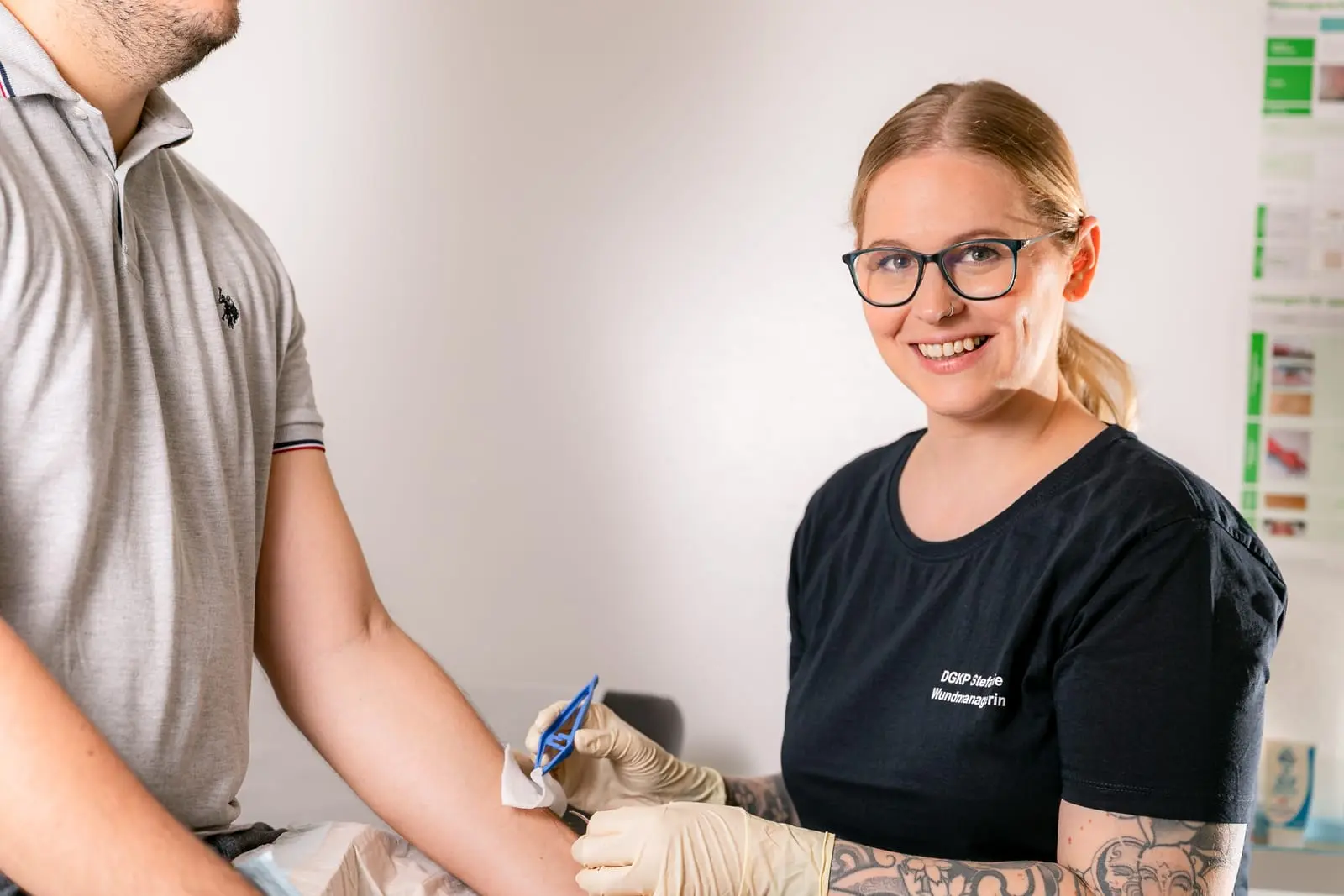
Photo: certified wound manager providing wound care with sterile tweezers and a gauze pad
Where
Home visit or wound clinic
Appointments
Quickly, within a few days
Duration
approx. 45⁠–⁠60 min · 2⁠–⁠3× per week
Pain
Relief through modern wound treatment
Dressings
We handle follow-up prescriptions & ordering

How fistulas and deep wounds develop

A fistula is a tube-like passage between two hollow organs, or between a hollow organ or a source of inflammation and the surface of the skin. Deep wounds often develop after an abscess has been opened or when a surgical wound opens up.

A deep wound goes beyond the upper layers of skin into fatty tissue, muscle or even bone – for example after accidents or operations, or with poor blood flow caused by diabetes.

  • Abscesses – after surgical opening, a wound cavity remains
  • Operations – wound dehiscence – the stitched wound opens up again
  • Pilonidal sinus – a fistula near the tailbone – after surgery, open wound treatment is often needed
  • Chronic inflammatory diseases – e.g. Crohn's disease

Common types of fistula

Fistulas are often caused by inflammation, infections, chronic diseases such as Crohn's disease or as a complication after surgery. Common types are:

  • Anal fistulas – usually after abscesses in the anal area – with pain or discharge
  • Enterocutaneous fistulas – a connection between the bowel and the skin, often after abdominal surgery
  • Vesicovaginal fistulas – a connection between the bladder and the vagina, can cause incontinence
  • Bronchopleural fistulas – after lung surgery, affect breathing

Our care

We assess the depth and extent of the wound, document its progress and choose the materials so that the wound can heal cleanly from the inside out.

Complex fistulas sometimes require surgery. We work closely with doctors and surgeons and pay attention to a diet rich in protein and vitamin C, as well as to the treatment of underlying conditions such as Crohn's disease or diabetes.

  • Wound irrigation – with suitable irrigation solutions
  • Packing – with alginates or hydrofibres, placed loosely
  • Managing wound fluid – absorbing wound fluid with superabsorbent and foam dressings
  • Protecting the wound edges – protects the surrounding skin from becoming soft and soggy
  • Negative pressure wound therapy – on a doctor's prescription, for large wound cavities
  • Documenting progress – measuring the depth of the wound at every appointment
  • Low-level laser therapy – can additionally support tissue healing
  • Guidance on self-care – skin care, pressure relief and hygiene in everyday life

What patients and relatives say

5.0 from 13 Google reviews

“Ms Schmelzer and her team are absolutely wonderful. They are extremely patient and do perfect work.”

D. L. · Google review, translated from German

“Especially with sensitive issues […] you notice the high level of professional competence. […] great on a human level and absolutely reliable professionally.”

H. K. · Google review, translated from German

“Not only the expertise and the empathetic, friendly manner […], but also the flexibility in finding appointments and the comprehensive advice completely convinced me.”

M. P. · Google review, translated from German

Selected reviews from our Google Business Profile, translated from German (shortened with […]). We have checked that the reviews shown come from people who have experienced our services themselves – as patients, relatives or carers. Partners are labelled. Overall rating: 5.0 out of 5 stars from 13 reviews (as of November 2026). All reviews on Google. Healing outcomes vary from person to person.

Frequently asked questions

What should I do about a fistula or a deep wound?

Have the cause checked by a doctor – surgery is often necessary. After that, the wound usually heals openly and needs regular irrigation and packing. We take care of this at home or in the wound clinic, in coordination with your surgeon.

Why must a deep wound not close at the top?

If the surface closes too early, a cavity with fluid can remain underneath – which makes abscesses more likely. That is why deep wounds heal in a controlled way from the inside out.

How often is a deep wound dressed?

Depending on the amount of fluid, usually from daily to every three days. We agree the schedule for the packing with you and your doctor and adjust it as soon as the wound gets smaller.

How long does a wound take to heal after pilonidal sinus surgery?

Wounds that heal openly after pilonidal sinus surgery often take several weeks to a few months. Regular wound care and good hygiene help the wound to heal from the inside out.

Do you provide wound care after fistula surgery?

Yes. Open wound treatment after fistula and abscess surgery is one of our services – including after surgery for a pilonidal sinus. We come to your home, or you can visit our wound clinic.

When should I see a doctor about a fistula?

If you have a fever, increasing pain, swelling or redness, or if a lot of pus suddenly comes out. A wound that keeps opening up again after surgery should also be checked by a doctor.

How much does care for a deep wound at home cost?

First appointment from €109, follow-up appointment of up to 45 minutes €85, €24 per additional started quarter hour. On top of this comes a travel fee from €21. With a doctor's order, the health insurance fund usually refunds approx. 10⁠–⁠15% for home visits, in our experience.

Book an appointment

  • Mon–Fri, 8:30 am – 6 pmavailable by phone
  • Weekends & public holidaysno home visits or clinic appointments; by phone only to make appointments
  • Callbackusually on the same working day
Phone+43 681 10447544E-mailoffice@pflegstro.atWhatsAppSend a messageA Meta service: when you write, data is sent to WhatsApp.

Not an emergency service – in an emergency:

  • 144Ambulanceif life is in danger (or 112)
  • 1450Health hotline24/7 – also tells you the nearest emergency department
  • 141On-call doctorsnights, weekends and public holidays

Request a callback

Just your name and phone number – we will get back to you usually on the same working day.

What is it about? (optional)

Please do not send diagnoses or photos of wounds – we will discuss them in person. Privacy

More topics: Wound care